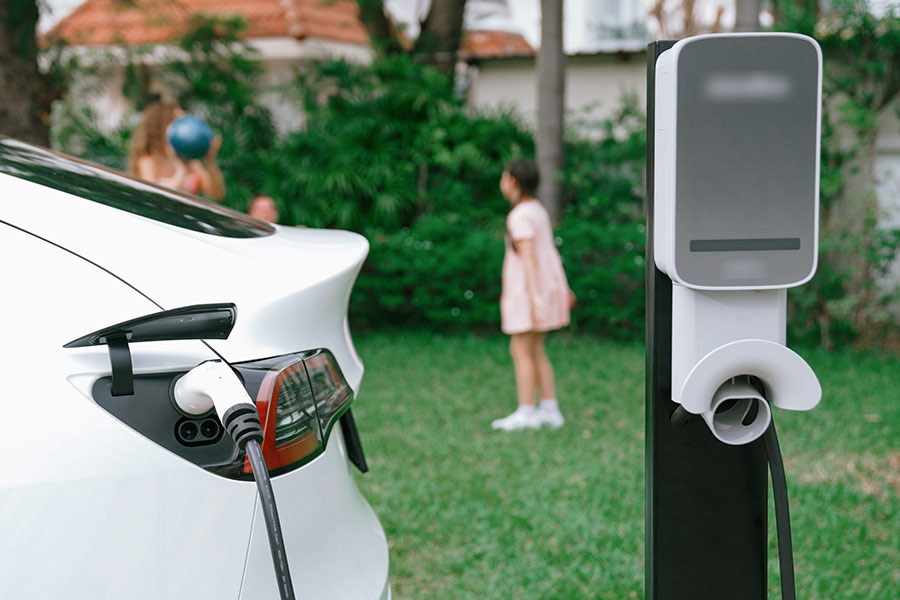
Electric vehicle ownership has been growing steadily across Denver and the broader Front Range, and it’s easy to see why. Between Colorado’s generous state tax credits, Xcel Energy’s rebate programs, and the simple convenience of waking up to a fully charged vehicle every morning, more Denver homeowners are making the switch each year. Neighborhoods like Capitol Hill, Platt Park, and the newer developments along the I-25 corridor are all seeing more EVs in driveways and garages.
The question most new EV owners arrive at quickly is how to charge at home more efficiently. The standard 120-volt outlet that comes with every vehicle gets the job done, but it’s slow, often adding only three to five miles of range per hour. A Level 2 home charging station changes that picture significantly, delivering a full charge overnight for most vehicles.
Before that installation happens, though, there are several things worth understanding. Our team has handled EV charging installations for Denver homeowners across a wide range of home types, electrical systems, and garage configurations, and the questions we hear most often point to a consistent set of things people wish they had known going in. Here are six of the most important.
1. Level 1 and Level 2 Charging Are Not the Same Thing
This distinction matters more than most new EV owners realize, and it shapes every decision that follows.
Level 1 charging uses a standard 120-volt household outlet, the same type you’d use for a lamp or a phone charger. No special equipment or electrical work is required, and every EV comes with a cord that plugs directly into one. The tradeoff is speed. Most Level 1 chargers deliver somewhere between 3 and 5 miles of range per hour of charging. For drivers with short daily commutes and overnight hours to spare, that may be sufficient. For anyone putting more than 30 or 40 miles on the vehicle in a day, Level 1 charging starts to feel limiting quickly.
Level 2 charging runs on a 240-volt circuit, the same voltage used by electric dryers and ranges. A Level 2 EVSE (Electric Vehicle Service Equipment) unit installed in a garage or on an exterior wall can typically deliver 20 to 30 miles of range per hour, meaning most vehicles charge fully overnight regardless of how far they’ve been driven. This is the setup the majority of homeowners land on once they’ve lived with Level 1 for a few weeks.
The installation of a Level 2 charger requires a dedicated 240-volt circuit, which in most Denver homes means electrical work is part of the project from the start.
2. Your Electrical Panel May Need to Be Evaluated First
This is the detail that catches the most homeowners off guard. A Level 2 EV charger typically requires a dedicated 40- to 50-amp circuit, sometimes more depending on the charger and the vehicle. If your panel doesn’t have the capacity to support that load, the charger installation isn’t just plug-and-play.
Older Denver homes, particularly those in established neighborhoods like Hilltop, Montclair, and Barnum West that haven’t had major electrical updates, sometimes have panels that are already close to capacity. A 100-amp service panel that’s been supporting the same household loads for 30 or 40 years may not have the headroom to add a dedicated EV circuit without some panel work happening first.
A licensed electrician will assess the panel before any charger work begins, looking at available capacity, the condition of existing breakers, and whether the service size is appropriate for the combined load of the home plus the new charger. In cases where the panel needs to be upgraded, that work runs alongside the charger installation rather than after it. Our team handles electrical panel repair and replacement and routinely evaluates panel capacity as the first step in any EV charging project.
3. Charger Selection Matters More Than Most People Expect
Not all Level 2 chargers are created equal, and the right one for a given household depends on several factors that are worth thinking through before making a purchase.
Key considerations include:
- Amperage rating: Chargers range from 16 amps up to 80 amps. A 40-amp charger running on a 50-amp circuit is a common and practical setup for most households. Higher-amperage chargers charge faster but require heavier wiring and a larger circuit breaker.
- Hardwired vs. plug-in: Some chargers are hardwired directly into the electrical system. Others plug into a 240-volt outlet, similar to a dryer outlet. Plug-in units offer flexibility if you move or switch vehicles, while hardwired units tend to be more streamlined and are required by some manufacturers for warranty compliance.
- Smart features: Many modern chargers offer Wi-Fi connectivity, scheduling features that let you charge during off-peak utility hours, and energy usage monitoring. For Denver homeowners on Xcel Energy’s time-of-use rates, the ability to schedule overnight charging during lower-cost hours can produce real savings over time.
- Outdoor rating: If the charger will be installed outside the garage or on an exterior wall, it needs to be rated for outdoor use, including the temperature swings Denver experiences across seasons.
- Vehicle compatibility: Most chargers work with most EVs, but it’s worth confirming compatibility with your specific vehicle before purchasing.
A licensed electrician who installs EV chargers regularly can help evaluate options based on your vehicle, your household’s daily driving patterns, and your panel’s capacity.
4. Placement and Wire Routing Affect Both Cost and Convenience
Where the charger gets installed relative to the electrical panel has a direct effect on installation cost and complexity. The further the charger is from the panel, the more wire is needed and the more labor is involved in routing it cleanly through walls, conduit, or other pathways.
In a typical Denver home with an attached garage where the panel is also located in the garage or an adjacent utility space, the wire run is short and the installation is relatively straightforward. In homes where the panel is on the opposite side of the house from the garage, or where the garage is detached, the routing becomes more complex and costs reflect that.
Placement also affects day-to-day use. The charger should be positioned close enough to where the vehicle parks that the charging cable reaches comfortably without being stretched across the garage floor. Most charging cables are 18 to 25 feet long, which provides reasonable flexibility, but it’s worth thinking through vehicle positioning in relation to charger placement before settling on a location.
A good electrician will walk through the garage and the panel location with you before the work begins and give you an honest assessment of the most practical and cost-effective placement option.
5. Permits and Inspections Are Part of the Process
EV charger installations in Denver require a permit and inspection through Denver Community Planning and Development. This is not a formality that can be skipped, and it’s also not something to be worried about. The permit and inspection process exists to confirm the installation meets current electrical code and is safe for the home and its occupants.
When you hire a licensed electrician to handle the installation, the permit process is part of what they manage. They pull the permit, do the work to code, and coordinate the inspection. Homeowners who attempt to install a charger themselves or hire an unlicensed contractor may end up with work that doesn’t pass inspection, that creates insurance complications, or that causes problems when the home is eventually sold.
Colorado also has specific requirements around EV-ready infrastructure in new construction and in certain renovation scenarios, so if you’re in the middle of a larger project, it’s worth confirming how those requirements intersect with your charger plans.
6. Rebates and Incentives Can Meaningfully Reduce the Total Cost
The upfront cost of a Level 2 charger and its installation is a real number, but it’s a number that available incentives can reduce significantly. Denver homeowners currently have access to several overlapping programs worth knowing about:
- Federal tax credit: The Alternative Fuel Vehicle Refueling Property Credit covers a portion of EV charger installation costs for residential properties. The specifics of the credit percentage and cap are worth confirming with a tax advisor given how these programs can change year to year.
- Xcel Energy rebates: Xcel Energy offers rebates for qualifying EV charger installations and has a dedicated EV program that includes time-of-use rate options designed to lower the cost of overnight charging.
- Colorado state incentives: Colorado has been an active state for EV-related incentives, including programs that have addressed both vehicle purchase and charging infrastructure. The Colorado Energy Office maintains current information on what’s available.
Taking advantage of these programs doesn’t require extra work on the homeowner’s part beyond confirming eligibility and keeping documentation of the installation costs. A licensed electrician familiar with local programs can often point you toward the right resources during the project itself.
Pairing the charger installation with a broader look at energy efficiency upgrades for the home is something a growing number of Denver homeowners are doing at the same time, particularly when the project already involves panel work or new wiring runs.
What the Installation Process Actually Looks Like
For homeowners who haven’t been through an EV charger installation before, it helps to have a clear sense of what to expect. A typical residential installation by a licensed electrician involves:
- Initial assessment: Evaluating the panel capacity, identifying the best charger placement, and discussing wire routing options
- Permit application: Pulling the required permit with Denver’s building department before work begins
- Circuit installation: Running a new dedicated circuit from the panel to the charger location, including conduit where required
- Charger mounting and wiring: Mounting the EVSE unit and making the electrical connections
- Testing: Confirming the charger powers on correctly and communicates with the vehicle as expected
- Inspection coordination: Scheduling the required inspection and being present to walk the inspector through the work
Most residential installations are completed in a single day. Homes where panel upgrades are needed first or where wire routing is complex may take longer, but your electrician should be able to give you a realistic timeline based on the specifics of your home before the project starts.
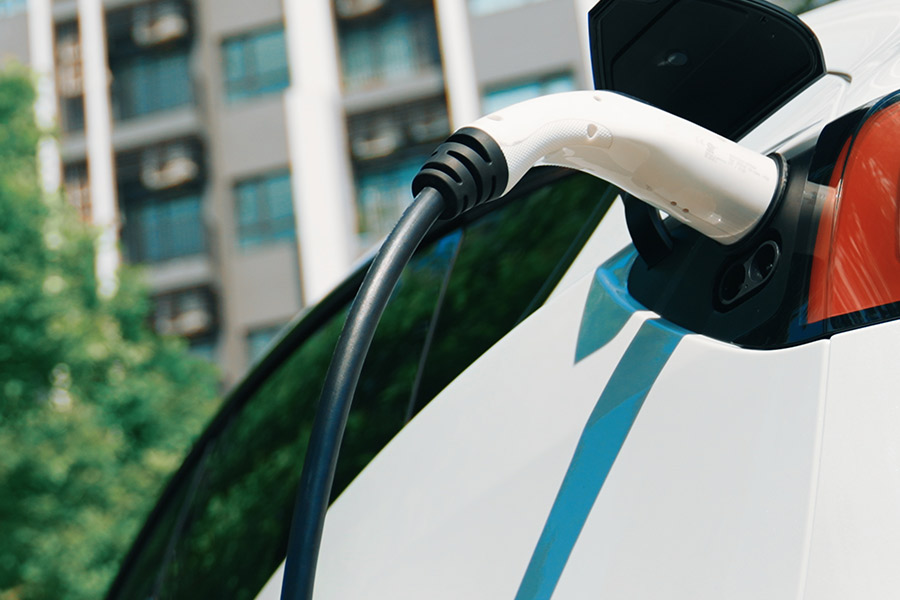
Getting Your Denver Home Ready for an EV Charger
Home EV charging is one of those upgrades that most owners say they should have done sooner. The convenience of a full charge every morning, combined with the long-term reduction in fuel costs, makes it one of the more practical investments Denver homeowners with an electric vehicle can make.
The key is having the installation done right from the start, with a licensed electrician who understands the local permitting process, can evaluate your panel honestly, and installs the system to code. Salzano Services works with Denver homeowners on EV charging station installation from assessment through inspection, and we bring the same commitment to upfront pricing and on-time service to every project. When you’re ready to move forward, contact our team today and we’ll get you set up with a charging solution that fits your home and your vehicle.