
A slow drain is one of those plumbing problems that’s easy to put off. The sink still drains, the shower still works, and it feels like something that can wait until the weekend. But slow drains rarely stay slow forever. Left unaddressed, partial clogs become complete blockages, and what could have been a straightforward fix turns into something more involved.
In Centennial, where established neighborhoods like Willow Creek, Foxridge, and Heritage Eagle Bend are home to houses built across several decades, slow drains are a regular part of our service calls. Older plumbing develops buildup over time, and even newer homes deal with the effects of hard water, high-use fixtures, and the debris that accumulates in drain lines through normal daily life.
As home service professionals serving Centennial and the surrounding area, our team gets called in regularly after a slow drain has been ignored too long or handled the wrong way. Below are five approaches that are safe for your pipes and your plumbing system, along with honest context about when each one is appropriate and when it’s time to call in a professional.
1. Remove and Clean the Drain Stopper or Strainer
The first and most straightforward approach to a slow drain is also the one that gets skipped most often. Bathroom sinks, tubs, and showers almost all have a stopper or strainer at the drain opening, and those components collect hair, soap residue, and debris as a matter of routine. When that buildup is significant enough, it restricts flow before water even reaches the pipe.
Removing a pop-up stopper from a bathroom sink or lifting a strainer from a shower drain and cleaning it thoroughly is a maintenance task that requires no tools, no chemicals, and no risk to your plumbing. In many cases, it’s all that’s needed to restore normal drainage.
If cleaning the stopper or strainer makes a noticeable improvement but the drain still runs slower than it should, the clog extends further into the line and the stopper was only part of the picture. That’s a useful piece of information because it tells you something about how much buildup has accumulated and whether a more thorough approach is warranted.
2. Use Boiling or Very Hot Water
Hot water is one of the gentler and more pipe-friendly approaches to breaking up soft clogs. Soap scum, grease, and light buildup respond reasonably well to heat, and running very hot water down a slow drain is a low-risk first step when the stopper is clean and the clog appears to be further in the line.
A few important caveats apply here. Boiling water should not be used in drains connected to PVC piping, which is common in many Centennial homes built from the 1980s onward. The heat can soften PVC joints and cause fittings to loosen over time. Very hot tap water is a safer choice for those systems. Porcelain fixtures can also crack under sudden exposure to boiling water, so running the hot tap first to warm the fixture gradually is a better approach.
Hot water works best on fresh, soft buildup. If the clog has been developing for a while or is made up primarily of hair and solid debris, hot water alone is unlikely to clear it fully. It may loosen things enough to produce a temporary improvement, but the underlying buildup will continue to restrict flow.
3. Try a Drain Plunger
A plunger is one of the most effective non-chemical tools for addressing a slow or blocked drain, provided it’s used correctly and on the right type of clog. The suction and pressure a plunger creates can dislodge clogs that have formed in the trap or the section of pipe just beyond it.
There are a few things worth knowing before reaching for one:
- Use the right plunger for the fixture. Cup plungers work well on flat sink and tub drains. Flange plungers are designed for toilets and won’t create an effective seal on a flat drain opening.
- Seal overflow openings first. Bathroom sinks have an overflow hole near the top of the basin. If it isn’t covered during plunging, pressure escapes through it rather than pushing down into the drain.
- Avoid plunging after using chemical drain cleaners. If a chemical product has already been poured into the drain, plunging risks splashing caustic material onto skin, surfaces, and fixtures.
Plunging works well on straightforward clogs close to the drain opening. It won’t address buildup deeper in the line, and it won’t do anything for clogs caused by pipe scale, root intrusion, or problems further down in the drain system.
4. Use a Drain Snake or Hair Removal Tool
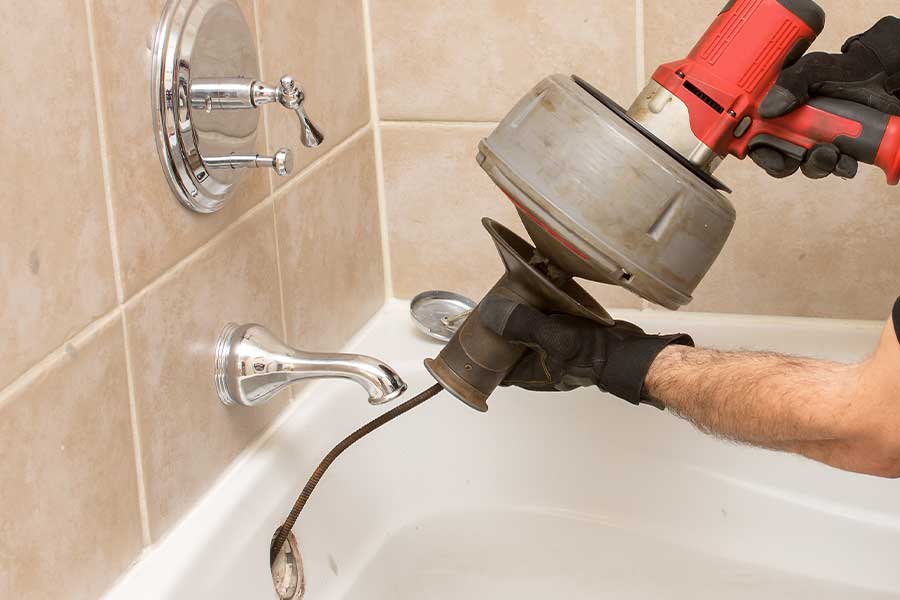
A hand-operated drain snake or a simple plastic hair removal tool can reach clogs that sit just beyond the trap, which is where a significant amount of hair and soap buildup tends to accumulate in bathroom drains. These tools work by physically grabbing or breaking up the material causing the restriction rather than relying on chemicals or pressure.
Plastic hair removal tools, sometimes called drain weasels, are inexpensive, widely available, and easy to use in bathroom sinks and showers. They’re one of the more practical tools for recurring hair clogs and are safe for all pipe materials.
Hand-operated drum snakes are more capable and can reach further into the line, but they require more care to use without scratching porcelain fixtures or accidentally dislodging pipe connections. For kitchen drains, which deal with grease and food debris rather than hair, a snake is less effective unless the clog is a concentrated mass rather than distributed buildup along the pipe walls.
When a snake doesn’t reach or resolve the clog, or when the same drain clogs repeatedly despite being snaked, it’s a reliable sign that the problem is either deeper in the system or structural in nature. That’s the point where professional drain cleaning services deliver results that hand tools simply can’t match.
5. Use a Baking Soda and Vinegar Flush
Baking soda and vinegar is one of the more commonly recommended home remedies for slow drains, and it’s worth including here because it’s genuinely safe for pipes and fixtures in a way that chemical drain cleaners are not. The reaction between the two creates fizzing action that can help loosen soft buildup and freshen the drain at the same time.
To be straightforward about what this approach can and cannot do: it works reasonably well as a maintenance measure and for very minor buildup, but it’s not going to clear a significant clog. The chemical reaction is relatively mild and dissipates quickly. For a drain that’s been slow for weeks, or one that’s approaching a full blockage, baking soda and vinegar is unlikely to make a meaningful difference.
What it does well is serve as part of a regular drain maintenance routine. Running this combination through bathroom and kitchen drains monthly, along with hot water, can help prevent the gradual buildup that leads to clogs in the first place.
What to Avoid: Chemical Drain Cleaners
Chemical drain cleaners are widely available and heavily marketed as the easy solution to a slow drain, but they deserve a specific mention here because they carry real risks that are worth understanding.
The active ingredients in most commercial drain cleaners, typically lye or sulfuric acid, work by generating heat and dissolving organic material. The problem is that they’re not selective about what they dissolve. Over time, repeated use of chemical cleaners degrades pipe walls, softens PVC joints, and corrodes the metal components inside older pipes. In Centennial homes with aging plumbing, that accelerated wear adds up.
Chemical cleaners also frequently fail to fully clear a clog. They may dissolve enough material to restore partial flow while leaving the bulk of the blockage in place, giving the impression the problem is solved until the drain slows again a few weeks later. Meanwhile, the remaining chemical sits in contact with the pipe until the next use of the fixture flushes it through.
For households with a septic system, chemical drain cleaners can also disrupt the bacterial balance that makes the system function. This is a consideration for some Centennial properties that aren’t connected to the municipal sewer.
When a Slow Drain Needs Professional Attention
The approaches above are appropriate for minor, accessible clogs in individual fixtures. There are situations where professional service is the right call from the start:
- Multiple drains slowing down at the same time, which points to a blockage in a shared line rather than an individual fixture
- Gurgling sounds from other fixtures when one drain is used, a sign of air displacement from a partial blockage further in the system
- Water backing up into other fixtures when a sink or toilet is used
- A drain that clears temporarily but slows again within days, suggesting buildup that a hand tool isn’t reaching
- Any drain in a home with older galvanized steel pipes, which are prone to internal scale buildup that requires professional equipment to address
- Slow drains accompanied by foul odors that persist after cleaning the stopper, which can indicate a deeper issue or a problem with the vent stack
These situations call for professional plumbing repairs and inspections rather than continued attempts with consumer tools. A licensed plumber can use camera inspection and hydro-jetting equipment to locate the actual source of the problem and clear it completely rather than working around it.
Understanding Drain Problems in the Context of Your Home’s Plumbing
A slow drain is sometimes just a slow drain. But in homes that are 20, 30, or 40 years old, recurring drain issues are often a sign of something more systemic happening in the plumbing. Pipe scale, root intrusion from mature trees in Centennial’s established neighborhoods, deteriorating pipe materials, and gradual grading shifts that affect how drain lines run are all factors that a camera inspection can identify and document.
If a home has had repeated drain issues across multiple fixtures, a plumbing inspection is often the most efficient way to understand what’s happening and what the right long-term fix looks like. In some cases, sewer line repair or replacement addresses a root cause that would otherwise keep producing drain problems regardless of how often individual fixtures are cleared.
Keeping Drains Clear in Centennial Homes
Slow drains are worth taking seriously, and the approaches above give homeowners a reasonable range of options to try before calling a professional. When those approaches don’t resolve the problem, or when the same drain keeps coming back, that’s useful information. It means the clog is telling you something about the condition of your plumbing that a quick fix isn’t going to address.
Salzano Services works with Centennial homeowners to diagnose drain problems accurately and fix them in a way that lasts. If you’ve got a slow drain that isn’t responding to basic measures, contact our team today and we’ll get the right eyes on it.