
If you’ve ever reached for your hair dryer in the bathroom or tried to plug something in near the kitchen sink and found a dead outlet, there’s a good chance a GFCI outlet was to blame. These small but important devices are built into millions of homes across Denver, from the bungalows in Washington Park to the newer buildings going up near Stapleton and Sunnyside, and when they stop working, it can bring daily routines to a quick halt.
GFCI stands for Ground Fault Circuit Interrupter. These outlets are designed to monitor the flow of electricity and shut off power instantly when they detect an imbalance. That protection is what makes them required by code in bathrooms, kitchens, garages, outdoor spaces, and anywhere water and electricity could interact. They’re genuinely life-saving devices, which is exactly why understanding what can go wrong with them matters.
Working as electricians serving Denver and the surrounding Front Range, our team sees GFCI problems come up regularly. Below are the seven most common reasons these outlets fail and what homeowners should know about each one.
1. The Outlet Has Tripped and Just Needs to Be Reset
This is the most common reason a GFCI outlet stops working, and it’s also the simplest. GFCI outlets are designed to trip when they detect a ground fault. Once tripped, power cuts off to that outlet and in some cases to other standard outlets connected to the same circuit. The outlet won’t function again until it’s reset.
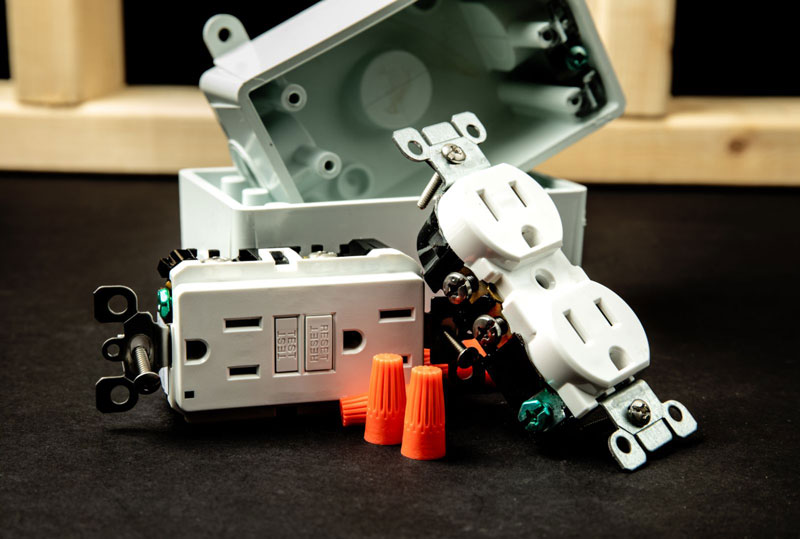
You’ll notice the “Test” and “Reset” buttons on the face of the outlet. If the outlet has tripped, pressing the “Reset” button should restore power. If it clicks back in and holds, you’re likely good to go. If it trips again immediately or won’t reset at all, that’s a signal something else is going on, which brings us to the remaining reasons on this list.
2. Moisture or Humidity Has Gotten Into the Outlet
Denver may be known for its sunny, dry climate, but moisture-related GFCI issues are still common, especially in bathrooms and outdoor installations. Even low levels of condensation or steam from a shower can work their way into an outlet over time and cause it to trip or fail to reset.
Outdoor GFCI outlets are particularly vulnerable during Denver’s spring and early summer months when afternoon storms roll through quickly. If water gets behind a cover plate or into the body of the outlet, it can cause persistent tripping or prevent the outlet from holding a reset. In these cases, the outlet typically needs to be inspected and replaced by a licensed electrician rather than simply dried out and reset.
3. A Connected Device Is Causing the Fault
Sometimes the GFCI outlet itself is fine. The problem is a faulty appliance or device plugged into it. Appliances with worn cords, damaged plugs, or internal faults can trigger a GFCI to trip because the outlet is doing exactly what it was built to do. It detected a problem and cut the power.
If an outlet keeps tripping after you reset it, try unplugging every device on that circuit before resetting. If the outlet holds with nothing plugged in, start reconnecting devices one at a time. When the outlet trips again, that’s your culprit. The device should be repaired or replaced before using that circuit again.
4. The Outlet Is at the End of Its Useful Life
GFCI outlets have a limited lifespan. Most are rated for around 10 years of reliable use, though real-world conditions can shorten that considerably. In our service calls throughout Denver, we regularly find older homes with original GFCI outlets that are 15, 20, or even 25 years old. At that point, the internal components that handle the tripping and resetting mechanism can degrade to the point where the outlet no longer functions properly.
An outlet that won’t hold a reset, trips without any load on it, or fails its own test button is almost certainly past its useful life. Professional GFCI outlet installation ensures the replacement is done correctly, tested properly, and wired to protect all the right downstream outlets on the circuit.
5. The Wiring Behind the Outlet Has a Problem
GFCI outlets protect not just themselves but also any standard outlets wired downstream from them on the same circuit. If wiring is connected incorrectly, reversed, or deteriorating, the GFCI will behave erratically. It may trip constantly, refuse to reset, or show power at the outlet face while failing to actually deliver it.
Wiring issues are not something a homeowner should attempt to diagnose or correct. Older Denver homes, particularly in neighborhoods like Capitol Hill, Potter-Highlands, and Sloan’s Lake, often have wiring that’s been modified over decades by multiple hands. What looks like a simple outlet problem can sometimes trace back to a wiring issue that affects the broader circuit. A licensed electrician can safely trace the problem and correct it.
6. There’s a Problem With the Electrical Panel
In some cases, a GFCI outlet that keeps tripping or losing power is reflecting a problem further up the line, specifically at the electrical panel. A breaker that’s weak, failing, or tripping intermittently can cause symptoms that look a lot like a faulty GFCI outlet. Homes with older panels or panels that are approaching capacity can be especially prone to these kinds of issues.
If you’ve replaced a GFCI outlet and the problem persists, or if you’re noticing other electrical oddities on the same circuit, it’s worth having a professional look at the panel. Our team handles electrical panel repair and replacement throughout the Denver metro and can identify whether a panel issue is contributing to outlet problems.
7. The Outlet Was Wired Incorrectly After a Previous Repair
Not all electrical work is done correctly. In homes that have had DIY repairs, flipped or renovated properties, or work done by unlicensed contractors, it’s not unusual to find a GFCI outlet that was wired incorrectly. Common mistakes include connecting the load wires to the line terminals, reversing the hot and neutral connections, or failing to account for how the outlet’s protection extends downstream to other outlets.
A GFCI outlet wired incorrectly may appear to function at first glance but won’t provide the protection it’s supposed to. In some cases, it won’t reset at all because the internal electronics detect a problem immediately. Any outlet that has a history of unusual behavior after a recent repair or renovation should be inspected to confirm the wiring is correct.
When to Call a Professional Instead of Troubleshooting Further
Resetting a tripped outlet is a reasonable first step for any Denver homeowner. Beyond that, most GFCI problems are best handled by a licensed electrician. Here’s a practical breakdown of when to make the call:
- Immediate re-tripping: The outlet trips right after resetting with nothing plugged in.
- Stuck reset button: The reset button won’t click in or stay in no matter what you try.
- Multiple outlets down: Several outlets in a bathroom, kitchen, or garage stopped working at the same time.
- Power present but not delivered: The outlet passes a visual check but devices plugged into it don’t receive power.
- Physical warning signs: You notice a burning smell, discoloration, or warmth around the outlet.
- Age and inconsistency: The outlet is more than 10 years old and has been behaving unpredictably.
Any of these situations call for professional electrical repair rather than continued troubleshooting at home. The risks of working inside electrical boxes without the right training and tools are real, and the cost of a professional repair is almost always far less than the cost of a bigger problem down the road.
What Denver Homeowners Should Know About GFCI Code Requirements
Colorado follows the National Electrical Code, and current standards require GFCI protection in a wide range of locations throughout a home. Required locations include:
- Bathrooms: All receptacles within bathroom spaces regardless of distance from water sources.
- Kitchen countertops: Any outlet within six feet of a sink requires GFCI protection.
- Garages: All receptacles in attached and detached garages must be GFCI protected.
- Outdoor receptacles: Any outlet exposed to the elements needs proper GFCI coverage.
- Crawl spaces and unfinished basements: Both are included under current code requirements.
- Pool and hot tub areas: All receptacles near water features require GFCI protection.
Older Denver homes may have been built under earlier code versions that required fewer GFCI outlets. While you’re not legally required to upgrade an older home to current code unless you’re doing permitted renovations, having GFCI protection in all the required areas is a sound safety investment. If you’re buying, selling, or renovating a home in Denver, it’s worth confirming your GFCI coverage meets current standards.
Keeping Your Denver Home’s Electrical System Protected
GFCI outlets are one of the most practical safety features in any home. They work quietly in the background and most homeowners barely think about them until something stops working. When that happens, a quick reset solves the problem the majority of the time. But when it doesn’t, the issue usually points to something that deserves a closer look from a professional.
Salzano Services has been serving homes across Denver and the broader Front Range for over 25 years. Our licensed electricians bring the experience and tools to diagnose GFCI problems accurately and fix them right the first time. If you’ve got an outlet that isn’t cooperating, contact our team today and we’ll get your home’s electrical protection back where it should be.